Welcome to the August 2025 Edition of the MPG Newsletter!
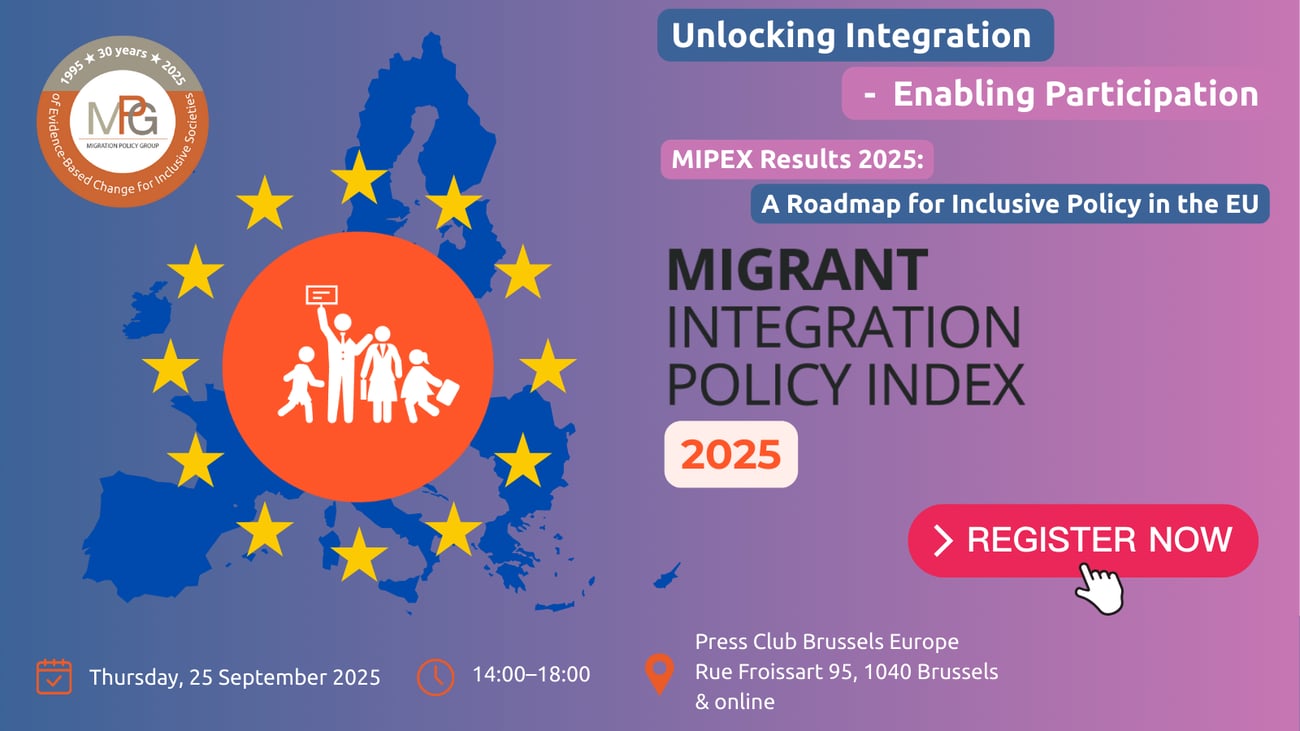
September is nearly here, and it’s a critical moment for integration policy in Europe. On 25 September, we are launching MIPEX 2025 EU27 results. This is not just another conference, it’s where European Union confronts the reality of integration. We will look at the current state of play of migrant integration across the EU and will explore what works, what fails, and how to raise standards across the board. Expect honest debate, sharp analysis, and real ambition. Register now!
Applications are still open for Democracy Academy 2025, MPG’s annual programme for emerging migrant leaders. The sessions kick off in November, but there’s still time to apply; the deadline is 28 September.
MPG is proud to co-lead the ConnACT project, using adult education to foster migrant inclusion. We are shaping the ACT Toolkit to support practitioners with tested methods for building inclusive, community-driven education programmes. By sharing best practices across Europe, ConnACT strengthens social cohesion and equal participation
Thank you for taking the time to read and stay engaged with our work. If you’ll be in Brussels for the MIPEX 2025 launch, we would be delighted to welcome you in person.
Join MPG on 25 September 2025 at the Press Club Brussels Europe or online for the launch of MIPEX 2025. We will look at the current state of play of migrant integration across the EU by unveiling the new MIPEX scores, highlight the positive and negative trends on 8 areas of integration and together with our expert panels. We will explore what works, what fails, and how to raise standards across the board. Expect honest debate, sharp analysis, and real ambition. Register now.
Apply now: Democracy Academy 2025 - MPG’s third annual programme for emerging leaders with migration backgrounds. Join five online Thursday sessions (13, 20, 27 November; 4, 11 December, 13:00–16:00 CET) on participation, evidence-based advocacy, organising, campaigning and strategic communications, led by experienced (migrant) leaders. Free to attend; certificate upon completion. Open to New Europeans with some civic/political experience. Limited to 25 places. Apply with CV by 28 September 2025.
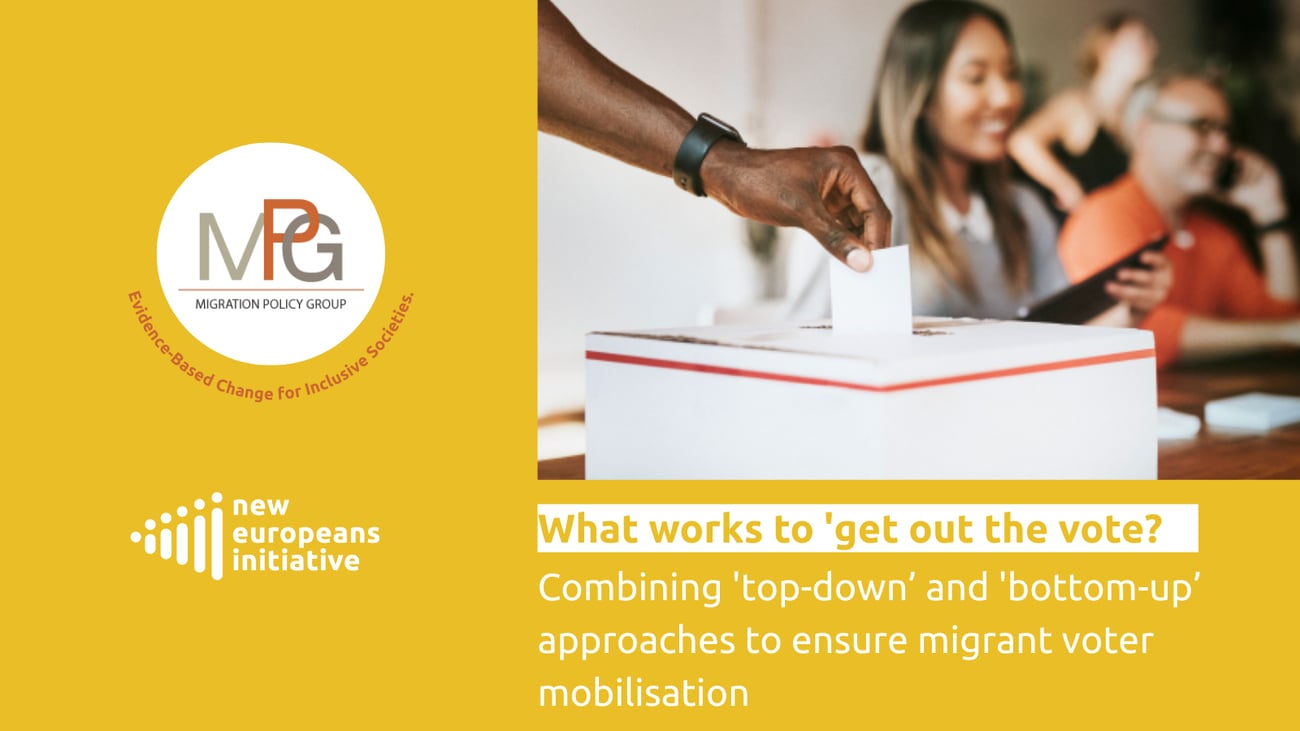
A new report from the New Europeans Initiative explores how to boost electoral participation among third-country nationals (TCNs) and EU mobile citizens. Based on interviews with migrant-led organisations, representatives, and VoteEuropa training participants, it calls for a combined approach: top-down reforms such as extended voting rights and automatic registration, and bottom-up measures like targeted outreach and co-designed awareness campaigns. The findings aim to guide policymakers, civil society, and electoral authorities toward more inclusive democratic participation.
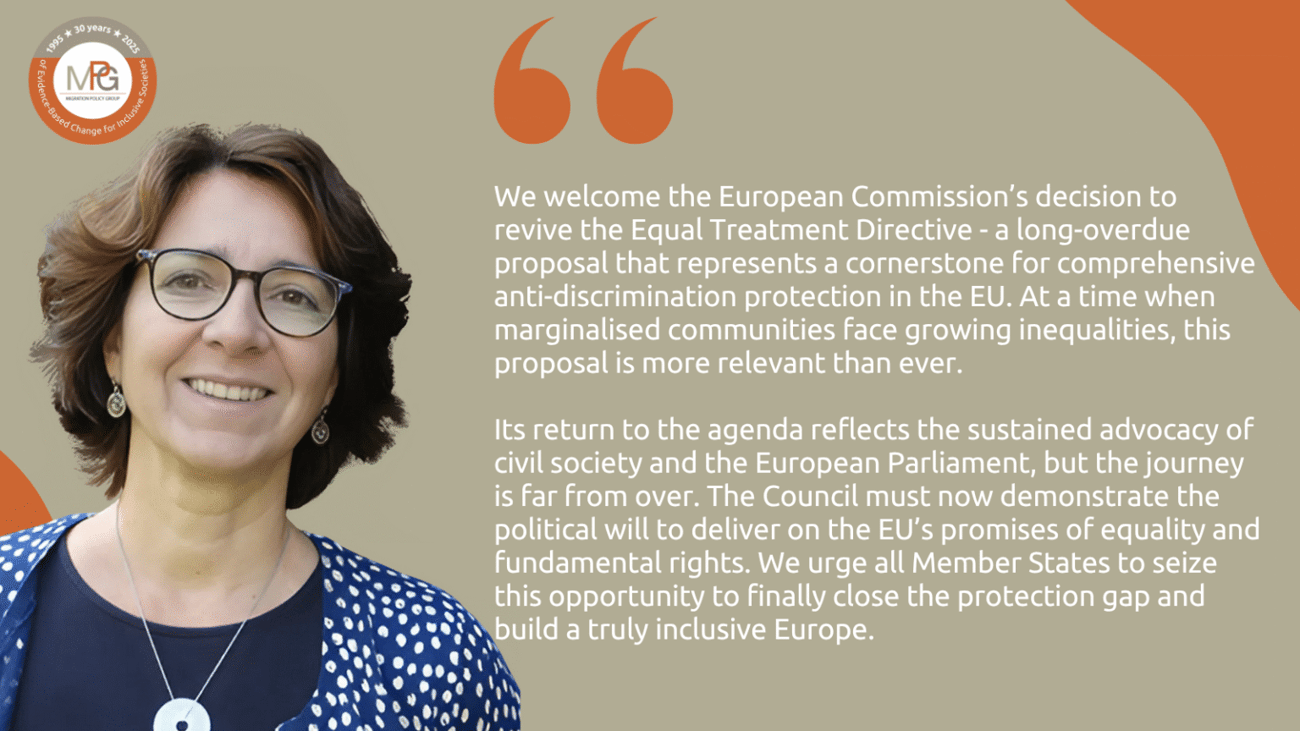
The European Commission has restored the Equal Treatment (Horizontal) Directive to its legislative agenda after civil society and European Parliament pressure. The proposal would extend anti-discrimination protections beyond employment to areas like social protection, including social security and healthcare, social advantages, education and access to and supply of goods and services including housing. MPG welcomes this critical step but urges the Council to show political will and adopt the Directive, closing long-standing protection gaps and ensuring equal rights for all in the EU.
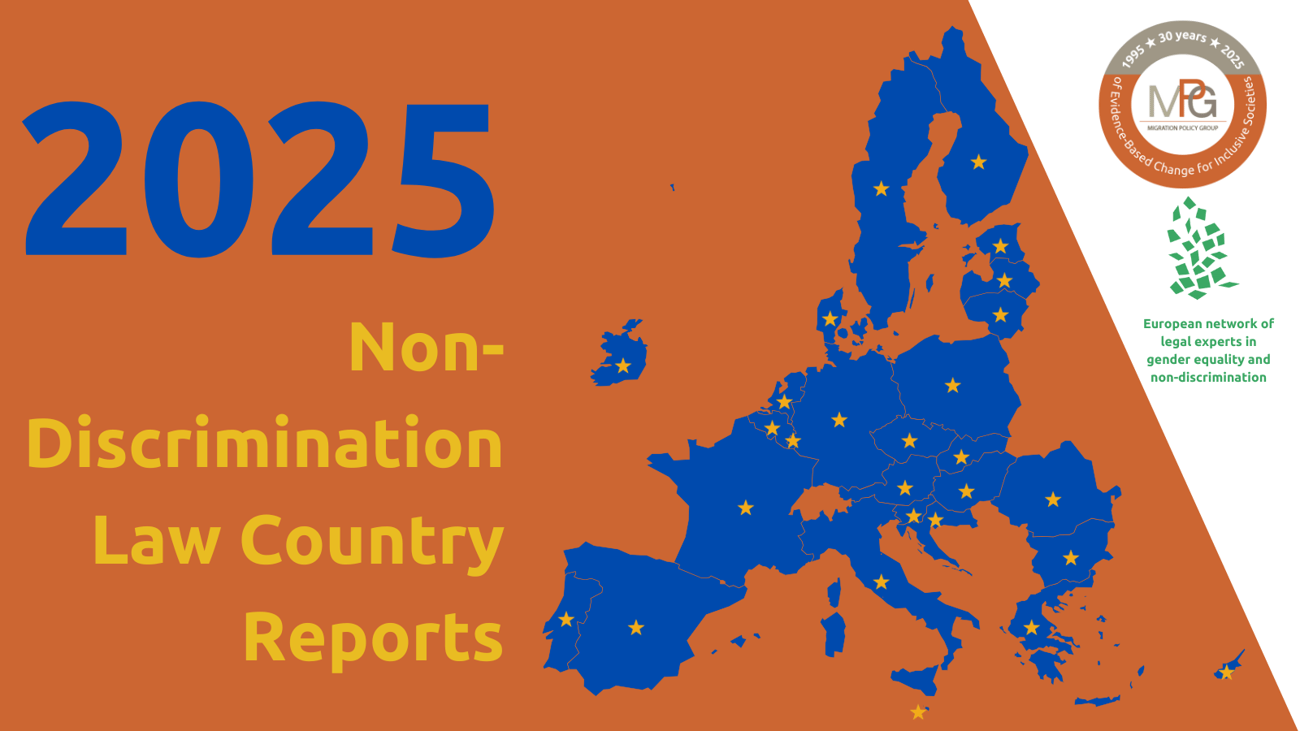
The European Network of Legal Experts in Gender Equality and Non-discrimination has begun publishing its 2025 country reports, covering policy and legal developments on the national level between 1 January 2024 and 1 January 2025. The reports assess how EU Member States transpose and implement the Racial Equality and Employment Equality Directives. Available now 21 countries.
MPG is proud to co-lead the ConnACT project, using adult education to foster migrant inclusion. MPG is shaping the ACT Toolkit to support practitioners with tested methods for building inclusive, community-driven education programmes. By sharing best practices across Europe, ConnACT strengthens social cohesion and equal participation.
The article explores why Luxembourg’s integration score in the Migrant Integration Policy Index (MIPEX) remains only average despite some progress. While the country offers strong legal protections, access to healthcare, and easier naturalisation for certain groups, significant gaps persist – particularly in political participation, family reunification, and long-term residence for non-EU nationals.
The Migrant Integration Policy Index (MIPEX) is a unique tool which measures integration policies in 56 countries across 8 policy areas. It provides up-to-date, comprehensive research data and analysis on which to base policies, proposals for change and projects.
In August 2025, it was featured in 6 scientific journals and articles.