|
|
|
|
|
|
Evidence-Based Change for Inclusive Societies.
|
|
|
|
|
|
|
Dear ,
Welcome to the January 2026 Edition of the MPG Newsletter!
As 2026 begins, the world has already been marked by tensions and disruptions of many kinds: many of these developments will have direct consequences for entire communities, and for the future of global migration, integration and non-discrimination dynamics. In this context, MPG starts the new year with even greater determination and with renewed confidence in our role in supporting decision-making and policy development grounded in evidence.
We invite you to join two upcoming webinars presenting findings from MPG’s latest research and exploring a core question for European democracies: who gets to participate, and who is still left at the margins? The first webinar (29 January) shares EU-wide evidence on New Europeans’ political participation, trust, and belonging, while the second webinar (17 February) focuses on racial structural discrimination and the barriers limiting migrant and minority voices.
Alongside other updates and news, we are also sharing three newly released reports that focus on how NGOs and trade unions support enforcement of EU non-discrimination law, a Comparative analysis of non-discrimination law in Europe 2025, and Instructions to discriminate under EU and national law.
This month also brings a message of hope: the acquittal in Greece of 24 humanitarian workers, including Seán Binder, with whom we have collaborated in the past on the issue of criminalisation of solidarity, marks an important victory for humanity. It is a powerful reminder of why our work matters and we look forward to continuing our efforts in the months ahead, grateful for your ongoing support in our mission to advance evidence-based migration, integration, and anti-discrimination policies.
|
|
|
|
|
|
|
|
Warm regards,
Isabelle Chopin, Director of MPG
|
|
|
|
|
|
|
|
|
|
|
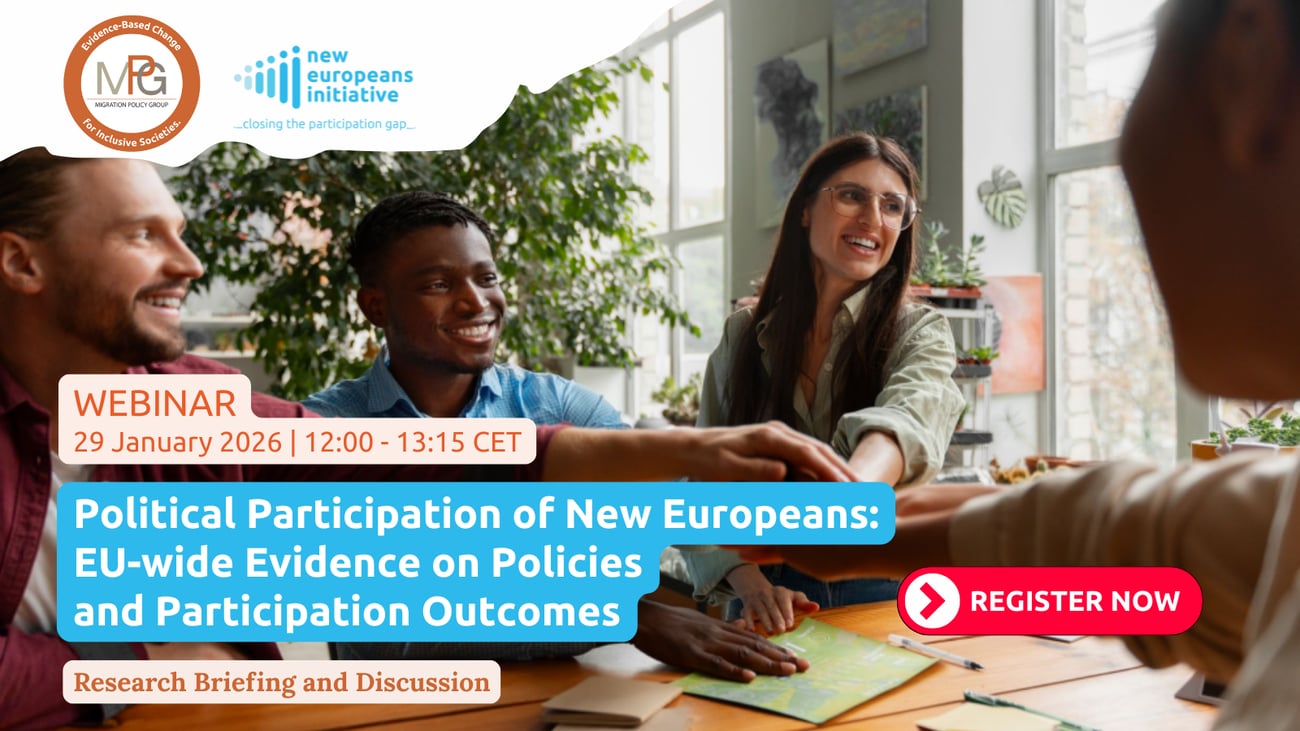
Webinar | 29 January 2026 | 12:00-13:15 CET
MPG’s New European Initiative invites researchers, universities, and think tanks to a briefing on new comparative findings on New Europeans’ political participation across 22 EU Member States - linking national frameworks to naturalisation, engagement, trust, and belonging, and what this means for EU democracy and policymaking.
|
|
|
|
|
|
|
|
|
|
|
|
|
Webinar | 17 February 2026 | 13:00–14:15 CET
Why are racialised groups, ethnic minorities, and migrants still underrepresented in European politics? Join MPG’s New European Initiative for the launch of a new policy brief on barriers to political participation - from voting and standing for office to funding civic and political engagement.
|
|
|
|
|
|
|
|
|
|
|
|
|
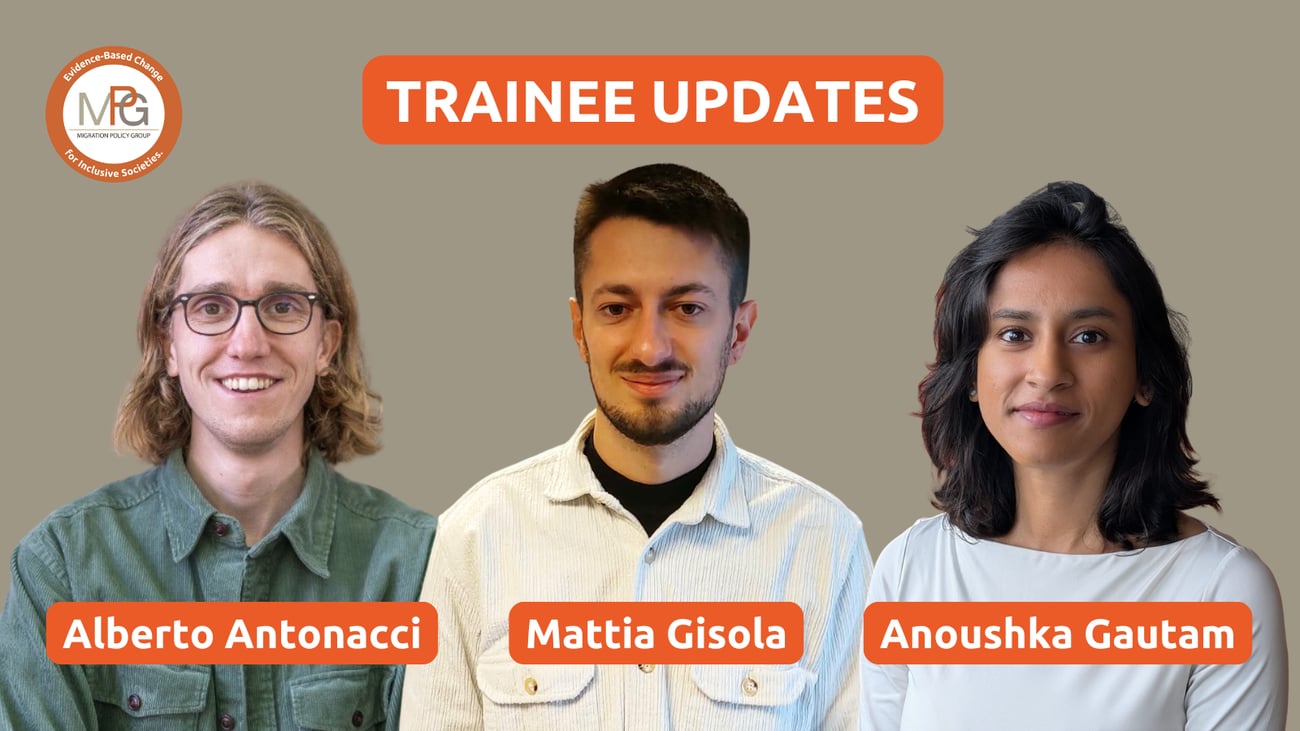
On 31 December 2025, we said goodbye to Alberto Antonacci, who supported our communications work as an intern throughout 2025. Thank you, Alberto, for your energy, positivity, and great support!
On 12 January 2026, we welcomed Mattia Gisola as our new Communications intern for the next six months. With a Master’s in Communication and Media and experience in human and migrants’ rights, Mattia will strengthen our outreach work.
Finally, on 16 January 2026, we said goodbye to Anoushka Gautam, our outstanding research intern. Thank you, Anoushka!
|
|
|
|
|
|
|
|
|
|
|
|
|
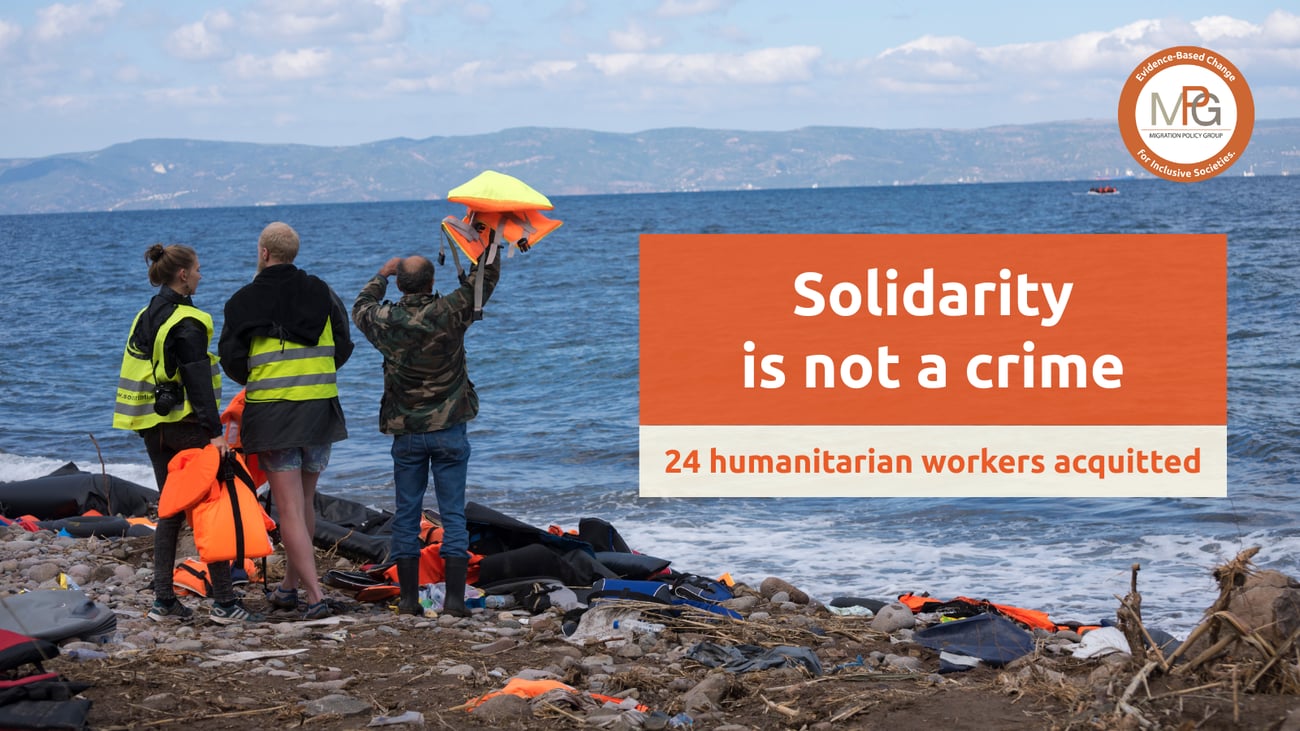
We warmly welcome the acquittal of all 24 humanitarian workers, including Seán Binder, with whom we have collaborated in the past on the issue of criminalisation of solidarity, after more than seven years of unfounded charges in Lesvos, Greece. This decision reaffirms a fundamental principle: saving lives is not a crime, but an essential part of protecting human rights. Yet the criminalisation of solidarity across Europe remains deeply concerning, with serious personal and humanitarian consequences. As Seán reminds us: “The more hopeless the situation becomes, the more we must continue to act.”
|
|
|
|
|
|
|
|
|
|
|
|
|
A new report is now available on how NGOs, associations and trade unions help enforce EU non-discrimination law across the 27 Member States. It looks at the legal and policy frameworks that enable or limit their work, from supporting victims and strategic litigation to collective redress, monitoring and advocacy. The report also highlights promising approaches and key challenges that still undermine effective enforcement.
|
|
|
|
|
|
|
|
|
|
|
|
|
This comparative analysis draws key conclusions from the 2024 country reports across all 27 EU Member States on how EU anti-discrimination law is transposed and applied in practice. It highlights overall policy trends, as well as remaining gaps and inconsistencies between countries. The report also provides a clear overview of core issues covered by the EU’s anti-discrimination directives, from protected grounds and the definition of discrimination to enforcement, access to justice and the role of equality bodies.
|
|
|
|
|
|
|
|
|
|
|
|
|
MPG is pleased to share the report on Instructions to Discriminate under EU and National Law, prepared for the European network of legal experts in gender equality and non-discrimination. It shows how discrimination can be enabled through “instructions” by those in power, often via intermediaries, making it harder to detect and challenge. The report highlights uneven protections across Member States, limited case law, and emerging risks linked to AI. It calls for clearer EU guidance, stronger harmonisation, and greater awareness to protect equality in practice.
|
|
|
|
|
|
|
|
|
|
|
|
|
In January 2026, MPG and its flagship MIPEX index featured in the EU, Lithuanian, Polish, Belgian, Maltese, Romanian, and Swedish media outlets.
|
|
|
|
|
|
|
|
|
|
|
|
|
The Migrant Integration Policy Index (MIPEX) is a unique tool which measures integration policies in 56 countries across 8 policy areas. It provides up-to-date, comprehensive research data and analysis on which to base policies, proposals for change and projects.
In January 2026, it was featured in 3 articles, 2 reports and 1 book.
|
|
|
|
|
|
|
|
|
|
|
|
|
|
|
Migration Policy Group
Avenue de Tervuren 32-34, Boîte 1, 1040 Etterbeek, Brussels, Belgium
|
|
|
|
|