Welcome to the April 2026 Edition of the MPG Newsletter!
This month, we are pleased to share new research and policy discussions that highlight how migration and integration policies continue to shape opportunities across Europe. From our latest findings on migrants’ political participation to insights on labour market inclusion and skills recognition, the evidence points to the importance of inclusive, well-implemented frameworks.
We also explore how migrant entrepreneurship can contribute to social inclusion, alongside emerging EU proposals aimed at removing barriers for newcomer entrepreneurs. Looking ahead, our upcoming SIRIUS conference will bring attention to the role of multilingualism in building more inclusive education systems.
At the same time, our work continues to inform public debate, with contributions to key media discussions on asylum, integration, and policy developments across Europe.
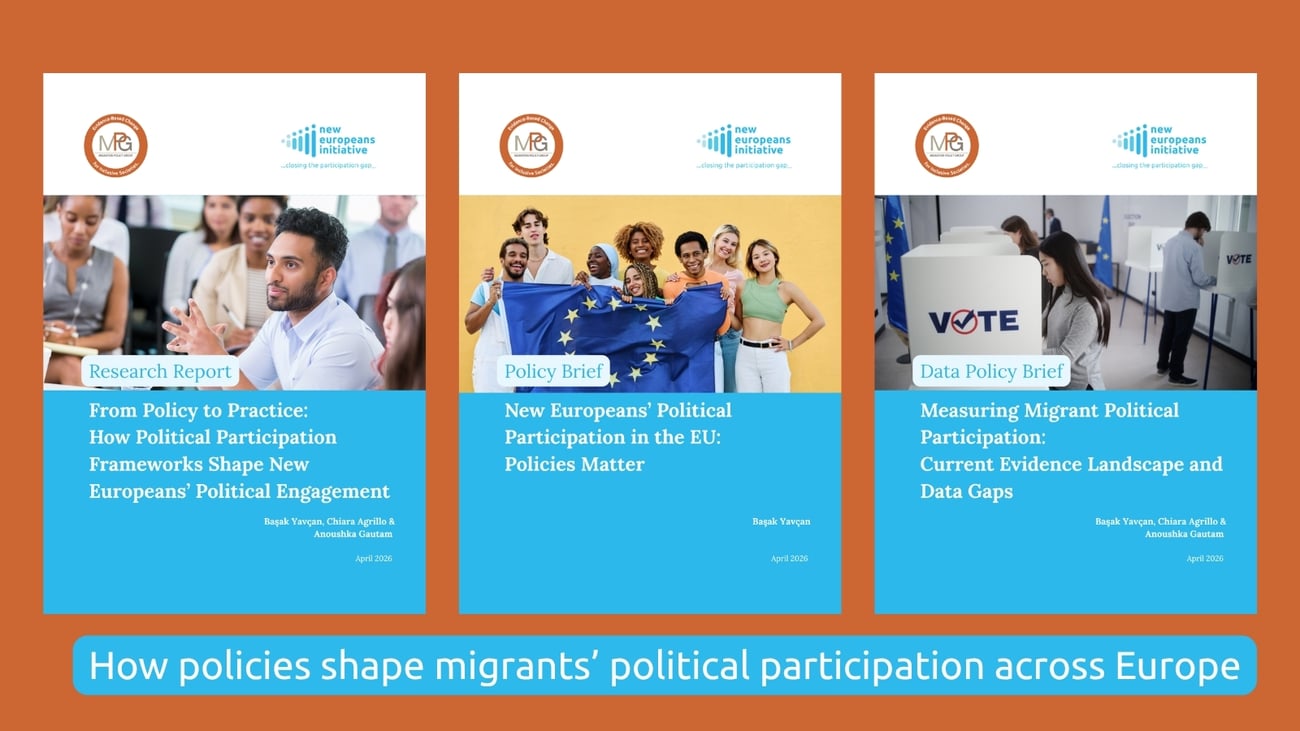
MPG’s New Europeans Initiative has launched three new publications examining howpolitical participation policies shape migrants’ engagement across the EU. The research finds that inclusive frameworks are linked to higher naturalisation rates, stronger political trust, and greater participation, but their impact is not automatic. Effective outcomes require outreach, civic education, and support for civil society. The findings also highlight persistent data gaps, limiting the ability to monitor participation trends and assess policy impact across countries.
MPG participated in the Euro-Mediterranean CSO Conference, contributing to discussions on migration, skills development and social inclusion. During Panel III, MPG's Başak Yavçan presented insights from MIPEX on improving recognition of migrants’ qualifications and strengthening labour market integration. She highlighted good practices from Germany, the Netherlands and Spain, showing how evidence-based policies can support inclusive growth. The exchange reinforced the importance of data, research and collaboration in shaping effective migration policies across the region.
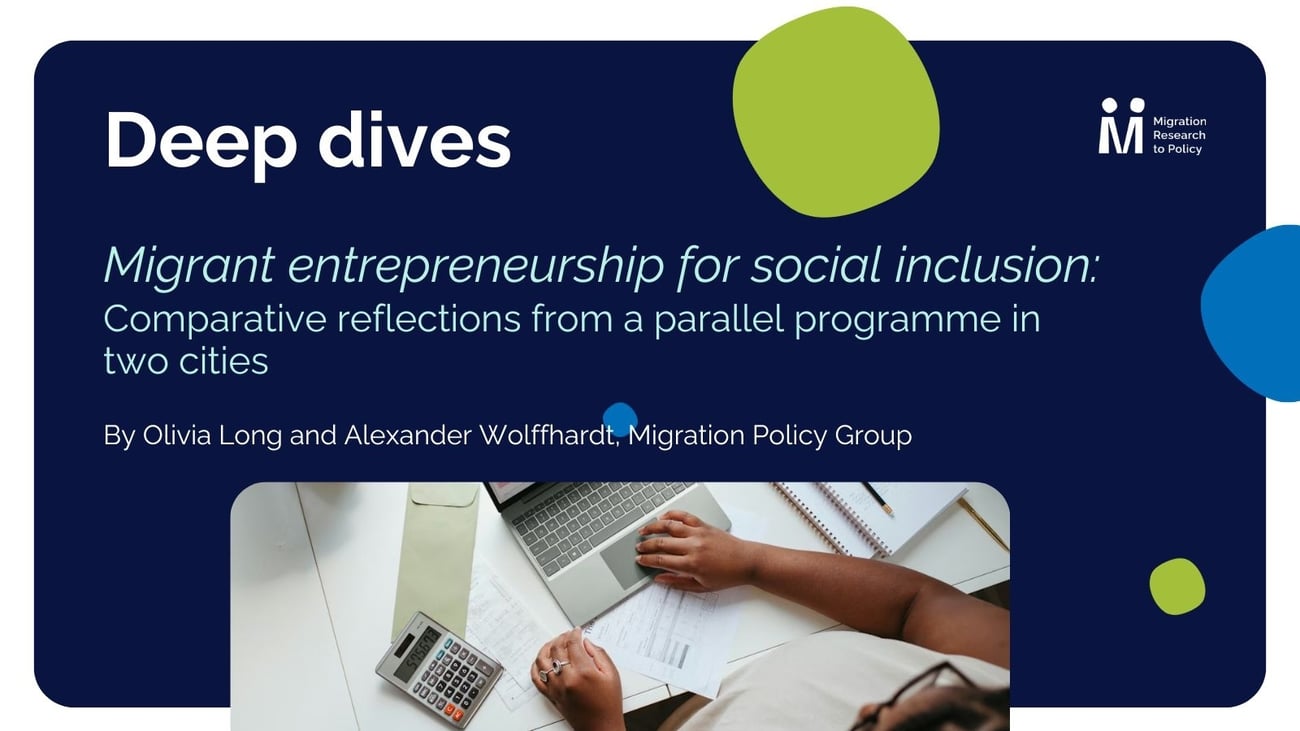
A new Deep Dive by the Migration Research to Policy Co-Lab, part of the INNOVATE project, explores how migrant entrepreneurship can drive social inclusion. Authored by MPG’s Olivia Long and Alexander Wolffhardt, the report examines pilot actions in Munich and Turin. It highlights persistent barriers such as access to finance and fragmented support, while showing that better coordination, collaboration, and inclusion of migrant voices are key to making existing systems more effective.
The European Commission’s proposed EU-Inc. “28th regime” could transform opportunities for newcomer entrepreneurs. By enabling online company registration in English without local intermediaries, it removes key barriers to market entry. A special edition of the Starting New newsletter explores this proposal, invites contributions to an EU-Inc. survey, and previews the next Around Europe feature on Sweden. MPG contributes to this coalition alongside partners working to advance inclusive entrepreneurship policies and highlight the impact of migrant-led businesses across Europe and insights.
The SIRIUS 3.0 Annual Policy Conference 2026 will take place online on 19 May from 13:30 to 17:30 CET. The event will explore how education systems across Europe can better support migrant and refugee students through comprehensive language policies. Drawing on findings from the MPG’s 2026 SIRIUS Watch report, the conference will highlight good practices, ongoing challenges, and the value of multilingualism in education, bringing together researchers, policymakers, and practitioners to inform more inclusive approaches.
In April, MPG featured in European media debates on migration and asylum. MPG's Başak Yavçan warned in The Parliament Magazine about risks of EU return hubs. Coverage also highlighted asylum rights gaps in Belgium and, drawing on Migrant Integration Policy Index data, weak integration systems in Slovakia, Romania, and Cyprus.
The Migrant Integration Policy Index (MIPEX) is a unique tool which measures integration policies in 56 countries across 8 policy areas. It provides up-to-date, comprehensive research data and analysis on which to base policies, proposals for change and projects. In April 2026, it was featured in 5 articles.