|
|
|
|
|
|
Evidence-Based Change for Inclusive Societies.
|
|
|
|
|
|
|
Dear ,
Welcome to the May 2026 Edition of the MPG Newsletter!
This month’s activities reflected both the urgency and complexity of integration and inclusion policymaking across Europe and beyond, while also marking an important milestone for MPG. With the publication of our Impact Report 2025, we reflected on 30 years of advancing evidence-based migration, integration, and anti-discrimination policies, and on the importance of connecting research, policy debates, and practical action in rapidly changing political contexts.
|
|
|
|
|
|
|
|
Warm regards,
Isabelle Chopin, Director of MPG
|
|
|
|
|
|
|
|
|
|
|
MPG has published its Impact Report 2025, marking 30 years of advancing evidence-based migration, integration, and anti-discrimination policies across Europe. The report highlights how MPG continued to connect research, policy debates, and practical action in 2025, helping policymakers, practitioners, and civil society navigate complex challenges with clarity and evidence. It also showcases MPG’s role in shaping key European discussions, supporting local innovation, strengthening expert networks, and promoting human rights-centred policymaking at a time of growing political and social challenges across Europe.
|
|
|
|
|
|
|
|
|
|
|
|
|
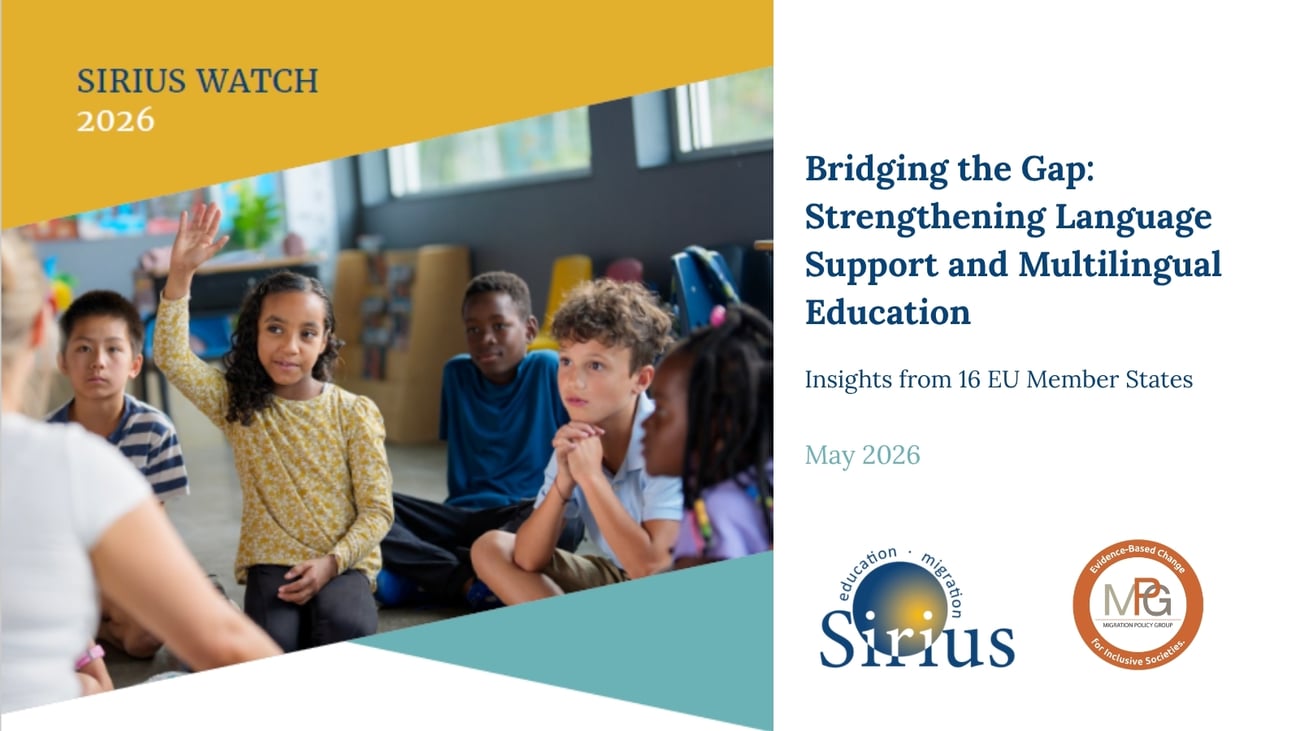
MPG and the SIRIUS Policy Network on Migrant Education launched the new SIRIUS Watch 2026 report during the SIRIUS Policy Conference 2026 on multilingual education. Authored by Mojib Rahman Atal and Alexander Wolffhardt, the report covers 16 European countries and examines how education systems support migrant learners through language assessment, multilingual education, and teacher preparation. While many countries increasingly recognise linguistic diversity as an asset, the findings reveal persistent gaps in implementation, fragmented support systems, and limited institutional support for first or family languages. The report also highlights promising practices and policy recommendations for more inclusive education systems.
|
|
|
|
|
|
|
|
|
|
|
|
|
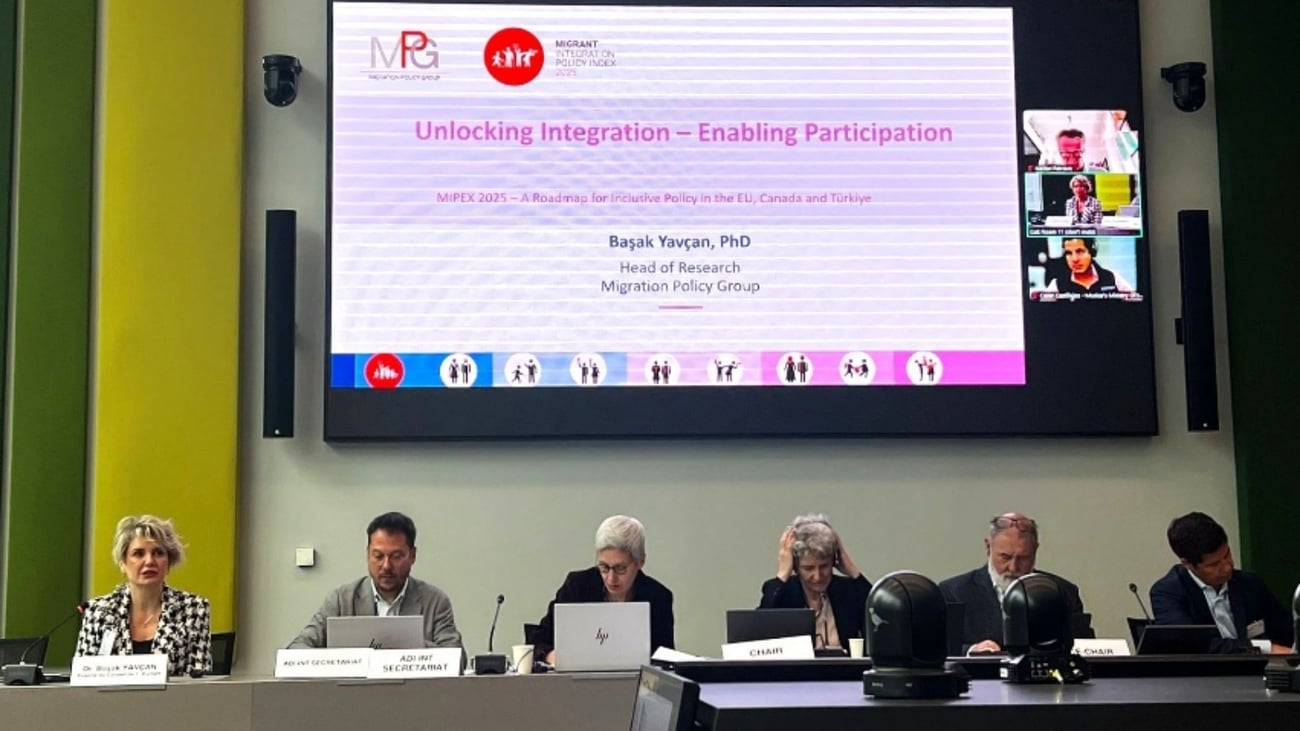
MPG participated in the Council of Europe’s 9th meeting of the Committee of Experts on Intercultural Inclusion (ADI-INT) meeting in Strasbourg, where MPG Head of Research Başak Yavçan presented recent MIPEX findings comparing integration policies across the EU, Canada, and Türkiye. Discussions focused on political polarisation, democratic backsliding, and challenges to and strategies for better integration governance in Europe. MPG also introduced a forthcoming self-assessment toolkit on multi-level governance for intercultural integration, developed within the Council of Europe framework to support coordination, stakeholder participation, and inclusive policymaking across national, regional, and local levels.
|
|
|
|
|
|
|
|
|
|
|
|
|
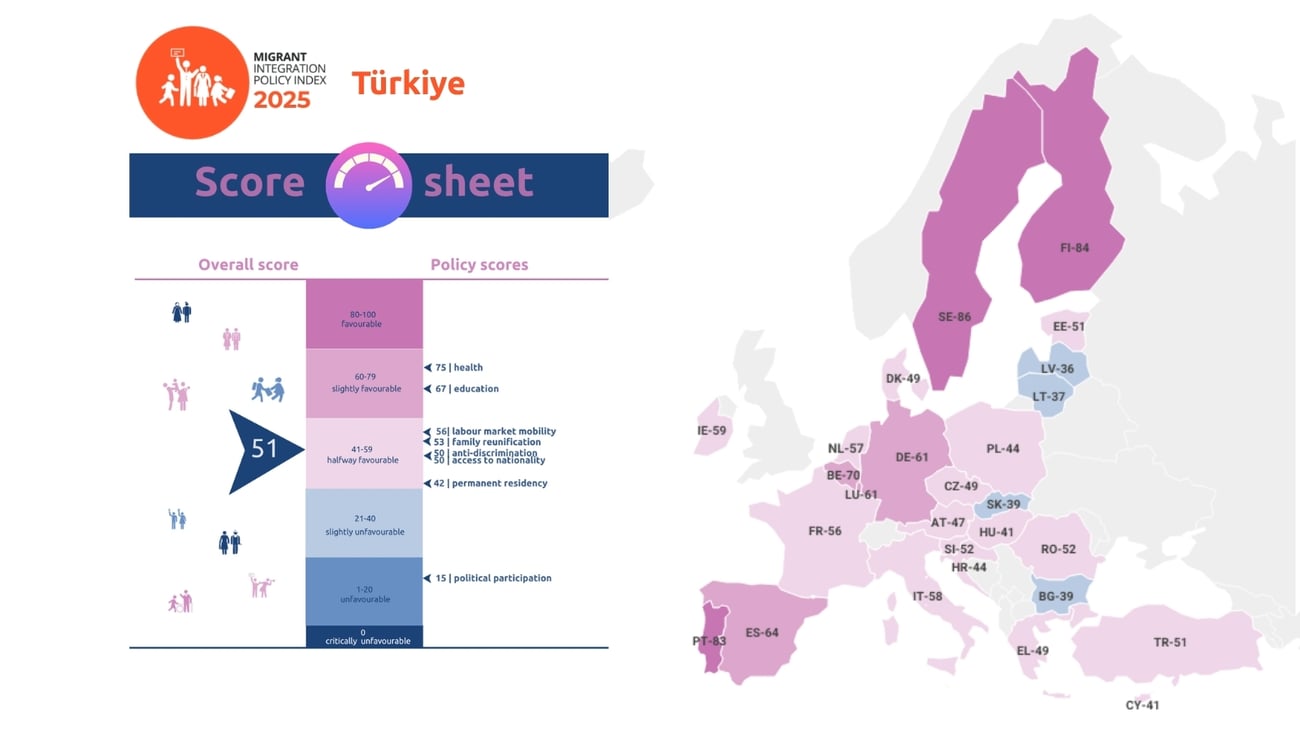
At a high-level policy forum in Istanbul, MPG’s Head of Research, Başak Yavçan presented the latest MIPEX findings for Türkiye, highlighting both progress and ongoing challenges in migrant integration policies. Organised with the Friedrich Naumann Foundation for Freedom Türkiye, and following a series of policy dialogues on the results in Ankara and İzmir, the event brought together policymakers, researchers, civil society, and international organisations to discuss integration, social cohesion, education, and labour market participation. Türkiye’s MIPEX score increased from 43 to 51, reflecting progress towards more structured integration policies due to improvements in labour market and education access, while persistent gaps remain in political participation, nationality, and long-term residence.
|
|
|
|
|
|
|
|
|
|
|
|
|
In May 2026, MPG and the MIPEX index were widely featured in international media discussions on citizenship, integration, labour migration, border controls, and demographic change. Coverage across Europe, Türkiye, South Korea and Ukraine highlighted MIPEX findings on integration policy strengths and gaps, while MPG experts contributed analysis on EU border enforcement and inclusion challenges. Media outlets also referenced MIPEX in debates on anti-discrimination, refugee integration, and the role of inclusive policies in strengthening long-term social cohesion and democratic participation.
|
|
|
|
|
|
|
|
|
|
|
|
|
The Migrant Integration Policy Index (MIPEX) is a unique tool which measures integration policies in 56 countries across 8 policy areas. It provides up-to-date, comprehensive research data and analysis on which to base policies, proposals for change and projects. In May 2026, it was featured in 3 articles.
|
|
|
|
|
|
|
|
|
|
|
|
|
|
|
Migration Policy Group
Avenue de Tervuren 32-34, Boîte 1, 1040 Etterbeek, Brussels, Belgium
|
|
|
|
|