|
|
|
|
September 2026 Newsletter
|
|
|
Evidence-based change for inclusive societies
|
|
|
|
|
|
|
Dear ,
Welcome to the September 2026 edition of the MPG newsletter!
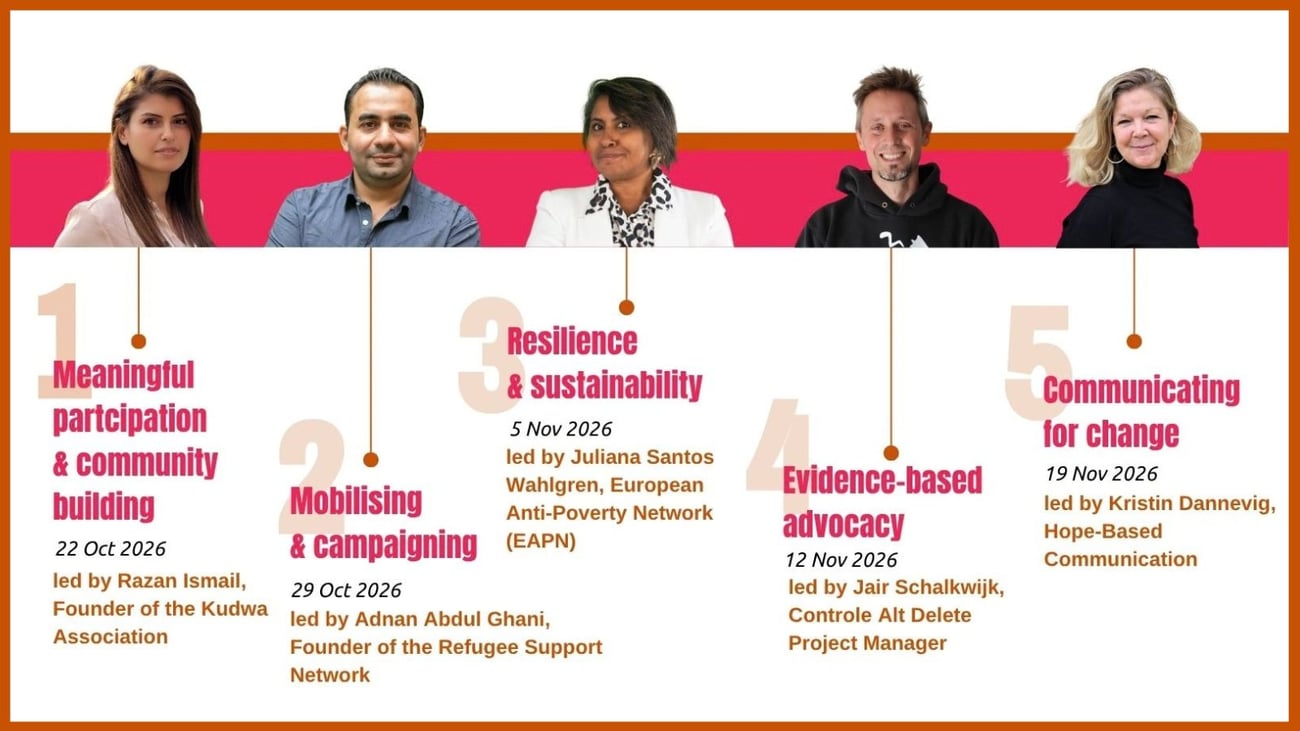
We are delighted to have already welcomed participants in the fourth edition of our annual Democracy Academy. Currently, however, there are still a few spots - emerging leaders with migration background who are based in the EU are welcome to apply. If you or someone you know fits this profile, hurry and share this opportunity with them! The academy starts shortly in October, and will bring the selected individuals into space of training and networking, where they can also join a cohourt of like-minded graduates.
Initiatives like this are especially important now that the space for civil society is shrinking across Europe. As major policy decisions on democracy, participation, migration and social inclusion are taken without sufficient input from the communities most affected, we encourage you to take part in our Migrant Voices Observatory survey. This re-launch of recent New Europeans Survey is an attempt to reach out to even more migrant- or refugee-led organisations, networks and activists with migration background, and amplify their voices at the EU level.
Indeed, this past month, we continued to inform the EU debate on migration. We took part in a Friedrich-Ebert-Stiftung (FES) exchange on fair recruitment from North Africa. Drawing upon our ongoing research, we stressed that outside of relaxing high-skilled visa regimes, the EU needs to look beyond recruitment and ensure sufficient legal pathways, as well as sound subsequent integration policies. We are also thrilled to share with you a video from the Finding Agreement in Return (FAiR) project, which explains the complex policies of return in an engaging and science-backed way, instead of obfuscating it with the usual political slogans.
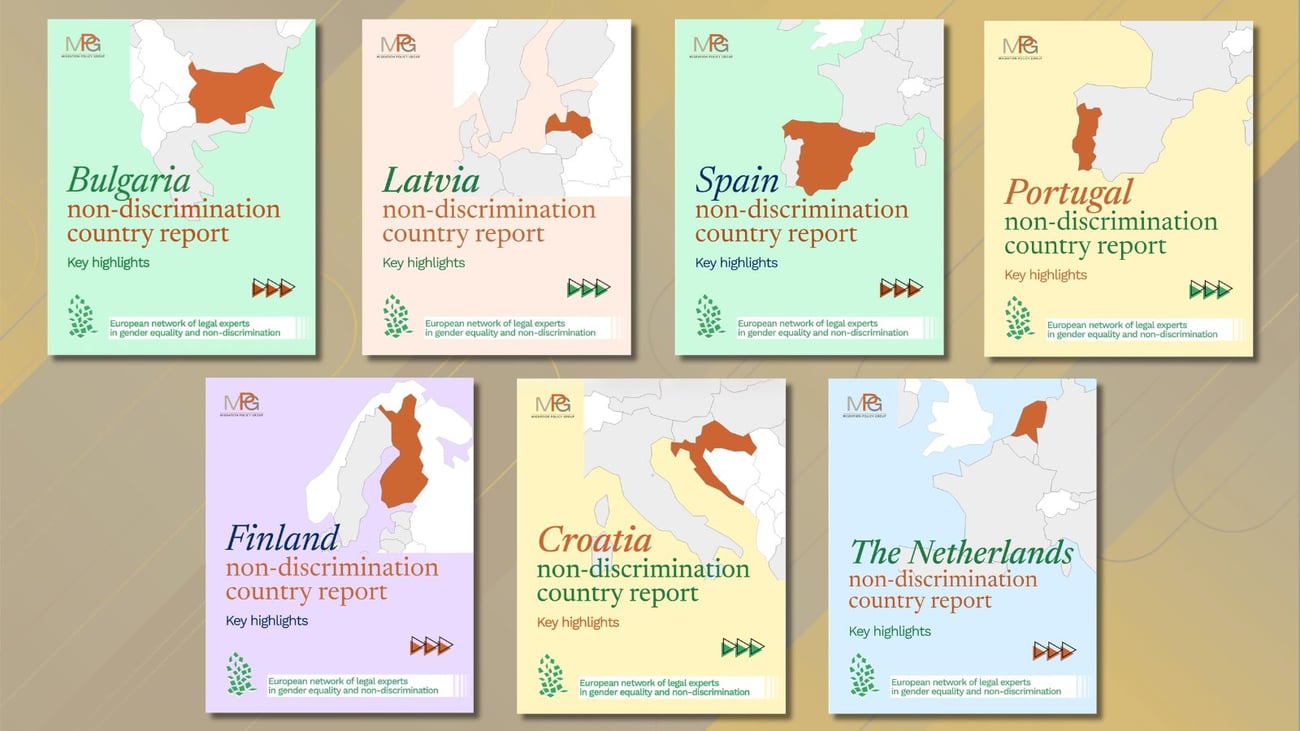
Finally, 7 new annual non-discrimination country reports coordinated by MPG came out in September. The reports, published by the European network of legal experts in gender equality and non-discrimination, are part of our decades-long commitment to mapping the enforcement of the EU's anti-discrimination legislation and the collection of equality data. Stay tuned as the last reports arrive on our channels in October!
|
|
|
|
|
|
|
|
Warm regards,
Isabelle Chopin, Director of MPG
|
|
|
|
|
|
|
|
|
|
|
Last month, we launched the applications for the fourth edition of one of our favourite initiatives. The academy is a space for training, knowledge-sharing and networking. The sessions are built on the expertise and feedback of other migrant leaders and previous graduates. Joining the initiative is an opportunity to form long-lasting, impactful connections. We received many applications and have already reached out to the candidates selected so far, but we are also still looking to fill a few spots left with the right individuals who respond to the profile of emerging migrant leaders based in the EU. Apply by Sunday, 18 October the very latest to join us!
|
|
|
|
|
|
|
|
|
|
|
|
|
Seven new 2026 non-discrimination country reports are out now
What are the latest trends and developments in the area of non-discrimination across the EU? In September, another seven 2026 country reports of the European network of legal experts in gender equality and non-discrimination became available, covering the developments in Bulgaria, Croatia, Finland, Latvia, the Netherlands, Portugal and Spain. The publications, coordinated by MPG, assess the level of transposition and implementation of both the Racial and Employment Equality Directives in the 27 EU Member States during the period of 1 January 2025 – 1 January 2026. The reports also look at case law and policies in the field. Check them out and watch out for the last few reports we will share in October!
|
|
|
|
|
|
|
|
|
|
|
|
|
If you belong to a migrant- or refugee-led organisation, network or initiative - or are an activist with a migrant background - we want to hear from you! Take part in the 2026 Migrant Voices Observatory survey here, by 1 November, Sunday, the latest, to identify your policy priorities and help ensure migrant perspectives are included in discussions about Europe's future.
|
|
|
|
|
|
|
|
|
|
|
|
|
Video: Europe is building a stricter return system. But what does the evidence say?
This summer, the EU gave its final approval for the new Return Regulation, moving towards a stricter common system and increase deportations. Our Finding Agreement in Return (FAiR) project, however, spent three and a half years examining what happens before, during and after return. FAiR argues that the European debate needs to look beyond the question of how to increase the number of returns. Instead, it should consider what makes return policy work for EU countries, as well as for migrants and their countries of origin. This new video explainer brings the FAiR research into the public debate, simplifying a complex policy area that is too often reduced to political slogans.
|
|
|
|
|
|
|
|
|
|
|
|
|
MPG Head of Research Dr Başak Yavçan spoke at a Friedrich-Ebert-Stiftung (FES) exchange on fair recruitment from North Africa, drawing on MPG’s Migrant Integration Policy Index (MIPEX) and our ongoing evaluation of several EU Migration Partnership Facility (MPF) projects. She pointed out good examples, but also stressed that the EU needs to look beyond recruitment and consider opening more legal pathways, and ensure sounder integration policies to retain high-skilled workers. Our research has also been quoted in relation to the upcoming tightening of the requirements for citizenship in Ireland, along with expertise from the Movement of Asylum Seekers Ireland (MASI), a leading refugee organisation in the country.
|
|
|
|
|
|
|
|
|
|
|
|
|
Our Migrant Integration Policy Index (MIPEX) is a unique tool measuring integration policies in 56 countries across 8 policy areas. It provides up-to-date, comprehensive research data and analysis on which to base policies, proposals for change and projects. In addition to data on national integration policies, MPG also gather data on policies at the regional level through Regin (MIPEX-R), and at the local level via Whole-COMM (MIPEX-L). See examples of how MIPEX was used in September 2026.
|
|
|
|
|
|
|
|
|
|
|
|
|
|
|
Migration Policy Group
Avenue de Tervuren 32-34, Boîte 1, 1040 Etterbeek, Brussels, Belgium
|
|
|
|
|